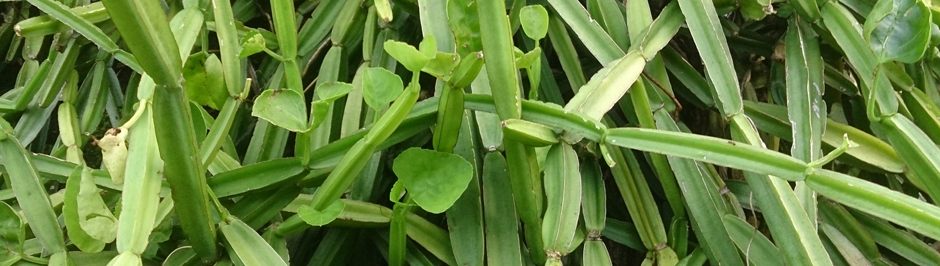
What is it?
Cissus quadrangularis, also known as veldt grape, adamant creeper, or devil’s backbone, is a plant that belongs to the grape family.
Native to certain parts of Asia, Africa, and the Arabian Peninsula, Cissus quadrangularis has long been used as a natural remedy to treat a wide variety of ailments.
Since ancient times, people have used it to help treat pain, regulate menstruation, and repair bone fractures.
The healing properties of this plant are attributed to its high contents of vitamin C and antioxidant compounds like carotenoids, tannins, and phenols.
Today, extracts produced from its leaf, root, and stem are widely available as herbal supplements. They can be found in powder, capsule, or syrup form.
Benefits of Cissus quadrangularis
Although Cissus quadrangularis is used to treat a number of health conditions, only a few of these uses are backed by research.
Here are the top science-based benefits of Cissus quadrangularis.
May promote bone health
Animal and human studies have found that Cissus quadrangularis may help reduce bone loss, speed the healing of fractures, and help prevent conditions like osteoporosis.
In fact, an 11-week study found that feeding Cissus quadrangularis to mice with osteoporosis helped prevent bone loss by altering levels of certain proteins involved in bone metabolism.
What’s more, a study in 9 people observed that taking 500 mg of Cissus quadrangularis 3 times per day for 6 weeks helped speed the healing of fractured jaw bones. It also appeared to reduce pain and swelling.
Similarly, a 3-month study in 60 people showed that taking 1,200 mg of Cissus quadrangularis daily promoted fracture healing and increased levels of a specific protein required for bone formation.
May reduce joint pain and swelling
Cissus quadrangularis has been shown to help reduce joint pain and relieve symptoms of arthritis, a condition characterized by swollen, stiff joints.
One 8-week study in 29 men with chronic joint pain found that taking 3,200 mg of Cissus quadrangularis daily significantly reduced exercise-induced joint pain.
Another study observed that feeding Cissus quadrangularis extract to rats reduced joint swelling and decreased several markers of inflammation, indicating that it may help treat arthritis.
Furthermore, a study in rats with arthritis noted similar findings, reporting that Cissus quadrangularis was more effective at reducing swelling than common medications used to treat rheumatoid arthritis and decrease inflammation.
However, human studies in this area are lacking, and more research is needed to investigate the potential benefits of Cissus quadrangularis on joint health.
May help prevent metabolic syndrome
Metabolic syndrome is a cluster of conditions that can increase your risk of heart disease, stroke, and diabetes.
These conditions include excess belly fat, high blood pressure and blood sugar, and increased cholesterol or triglyceride levels.
Some research shows that Cissus quadrangularis may help prevent metabolic syndrome by improving several of these conditions.
In an 8-week study, 123 people took 1,028 mg of Cissus quadrangularis daily, as well as a combination of other supplements, including green tea, selenium, and chromium.
This treatment significantly decreased body weight and belly fat, regardless of diet. It also improved fasting blood sugar, triglycerides, and total and LDL (bad) cholesterol levels.
In another 10-week study, 72 people took 300 mg of Cissus quadrangularis daily. Researchers observed that it reduced body weight, body fat, waist size, blood sugar, and total and LDL (bad) cholesterol levels.
However, it’s important to note that one analysis of nine studies found that Cissus quadrangularis only increased weight loss when used in combination with other supplements — not when taken on its own.
Due to a lack of studies on the effects of Cissus quadrangularis on metabolic syndrome, it’s unclear if it can help prevent or treat this condition.